
 Watching the English: how the English dress
Anthropologist Kate Fox dedicated twelve years to investigating different dimensions of English culture with the goal of identifying what constitutes the 'defining characteristics of Englishness'. Below is a passage taken from her book Watching the English.
The English struggle with and maintain a troubled, largely dysfunctional relationship with clothing. The core difficulty lies in their strong dependence on established guidelines and their inability to manage without them. This clarifies their worldwide reputation as generally poor dressers, yet with distinctive strengths in particular domains—refined men's tailoring, formal ceremonial outfits, and cutting-edge street-level fashion. Put simply, English people perform best at dressing when operating within a 'uniform' structure. It may surprise you that 'cutting-edge street-level fashion' is included in the uniform category.
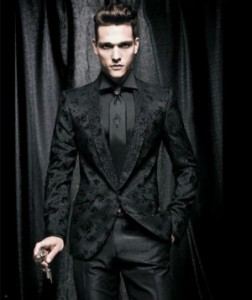
Surely the parrot-haired punks or the Victorian vampire Goths are being original, not following rules? It’s true that they all look different and eccentric, but in fact they all look eccentric in exactly the same way. They are wearing a uniform. The only truly eccentric dresser in this country is the Queen, who pays no attention to fashion and continues to wear what she likes, a kind of 1950s fashion, with no regard for anyone else’s opinion. However, it is true that the styles invented by young English people are much more outrageous than any other nation’s street fashion, and are often imitated by young people all over the world. We may not be individually eccentric, apart from the Queen, but we have a sort of collective eccentricity, and we appreciate originality in dress even if we do not individually have it.
Through additional research, a further 'principle' of English behaviour came to light: it holds great significance for the English to maintain a light-hearted attitude and possess the ability to laugh at their own expense. Nevertheless, adolescents, as is commonly understood, generally tend toward excessive self-seriousness. Would a 'subculture' of young people be capable of laughing about their clothing choices? I chose to investigate and approached a community whose personal identity is strongly bound to their style and appearance—the Goths.
The Goths, dressed in their dark and sinister black attire, certainly appear to take themselves very seriously. However, upon engaging them in conversation, I was pleasantly surprised to discover they too possessed humour. I happened to chat at a bus stop with a Goth dressed entirely as a vampire – complete with a pale face, intense purple lipstick, and pointed black hair. I noticed he was also wearing a T-shirt bearing 'Goth' in bold letters. 'What's the reason for wearing that?' I enquired. 'Just to make sure you know I'm a Goth,' he replied in a mock-serious manner. We both regarded his unmistakably striking appearance and couldn't help but laugh.
Adapted from New English File Intermediate, Student's Book